16 September 2026 · 6 min read
What preparation and paint correction is needed before ceramic coating?
Preparation is one of the most important parts of any ceramic coating job. A coating does not hide poor paint or correct defects. It bonds to and preserves the surface beneath it, so swirls, stains and contamination need to be dealt with before the coating cures.
A safe, thorough wash
The process starts with a thorough pre-wash to remove as much loose dirt as possible before the paint is touched. The car is then contact washed using suitable detailing products and safe techniques. This reduces the risk of dragging grit across the surface.
Chemical and mechanical decontamination
Washing alone will not remove everything. Iron particles, brake dust and road tar can remain bonded to the paint, so specialist chemical products are used to dissolve them safely. A clay bar or clay mitt may then be needed to lift anything still attached to the surface.
Once this stage is complete, the paint should feel perfectly smooth and be ready for a proper inspection.
Inspecting the paint
Good lighting reveals swirl marks, scratches, oxidation, water spots, dull areas and signs of previous repair. Paint thickness readings may also be taken before machine polishing, particularly when the history or condition of a panel is uncertain.
Choosing the right level of paint correction
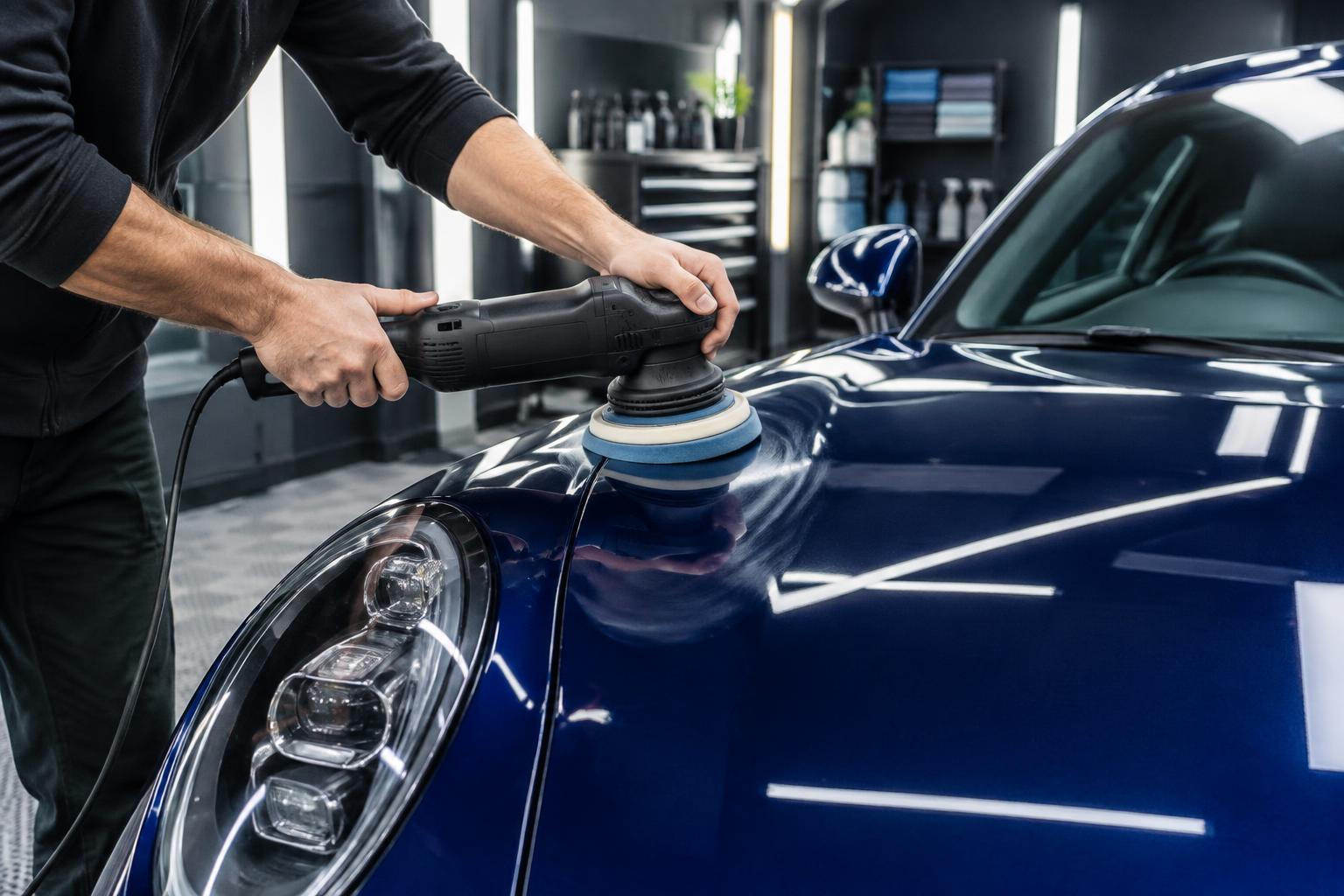
Paint correction uses polishing compounds, pads and machine polishers to refine the surface. A single-stage enhancement can improve gloss and reduce light swirls on a well-kept car. More heavily marked paint may need several stages of correction.
Removing every defect is not always wise. Some scratches extend too far into the clear coat, and chasing them completely could remove more paint than is safe. The right approach balances a strong visual improvement with the long-term health of the finish.
Final cleansing before coating
Polishing leaves oils and residues that can interfere with the coating bond. The paint is carefully wiped down with a suitable panel preparation product, following the coating manufacturer's guidance. Trim, glass, wheels and paint protection film may need different preparation and products.
Application and curing conditions
Ceramic coating should be applied in a clean, controlled space with good lighting and suitable temperature and humidity. Dust, moisture and poor conditions make application harder and can affect the result. Once applied, the coating needs time indoors to level and cure before it is exposed to rain or washing.
Good preparation takes time, but it is not an optional extra. It determines how the paint looks, how evenly the coating cures and how effectively it bonds. Careful preparation can transform the finish and help the protection perform properly for years.
David Knight